Westham Partners Lab · Inaugural Issue
Why We're Here
Making Sense of the Infrastructure Beneath the AI Era

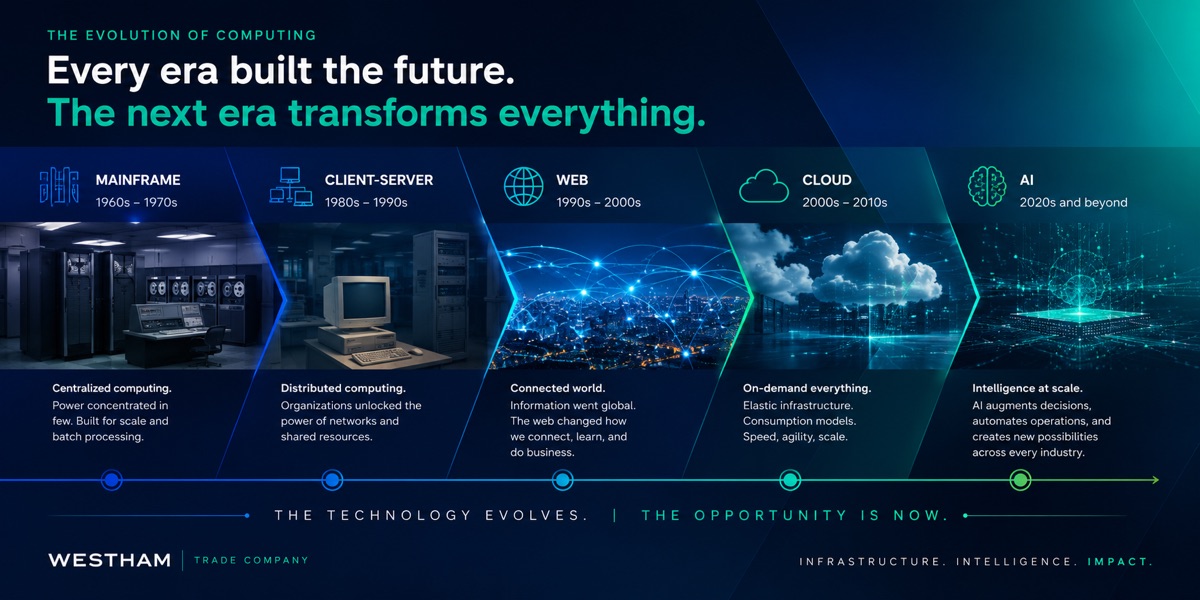
Every few decades, the machinery that runs business gets rebuilt. You read me correctly... I said not refreshed, rebuilt. The mainframe gave way to client-server, client-server gave way to the web, and the web gave way to the cloud. Each transition created winners, erased incumbents that looked permanent, and quietly rewired how money moved through the economy.
Today we are in the middle of another rebuild, and unlike the others, it is easy to misread while it is happening, especially from where we sit. Most of the analysis that shapes the conversation is written in Silicon Valley, for companies with hyperscaler regions next door, power to spare, and budgets in dollars that never have to cross a currency line. The funny thing is, this is not the reality of a bank in Santo Domingo, a retailer in Guatemala City, a manufacturer in Monterrey, or a telecom operator in Kingston.
This new conversational space exists to help our partners read the rebuild correctly, from our part of the world.
The problem we're actually trying to solve

If you run technology projects across Central America and the Caribbean, as a CIO, an architect, an engineer, or a partner advising all three, you are drowning in announcements and starving for judgment that fits our context.
We know that every vendor has an AI strategy. Every press release contains a number large enough to feel important and vague enough to mean nothing. A new chip launches, a cloud provider reprices its services, a storage company reinvents itself as a data platform, a networking vendor rebrands its switches as AI fabric, and somewhere in the noise is a signal that will actually change your roadmap and your budget.
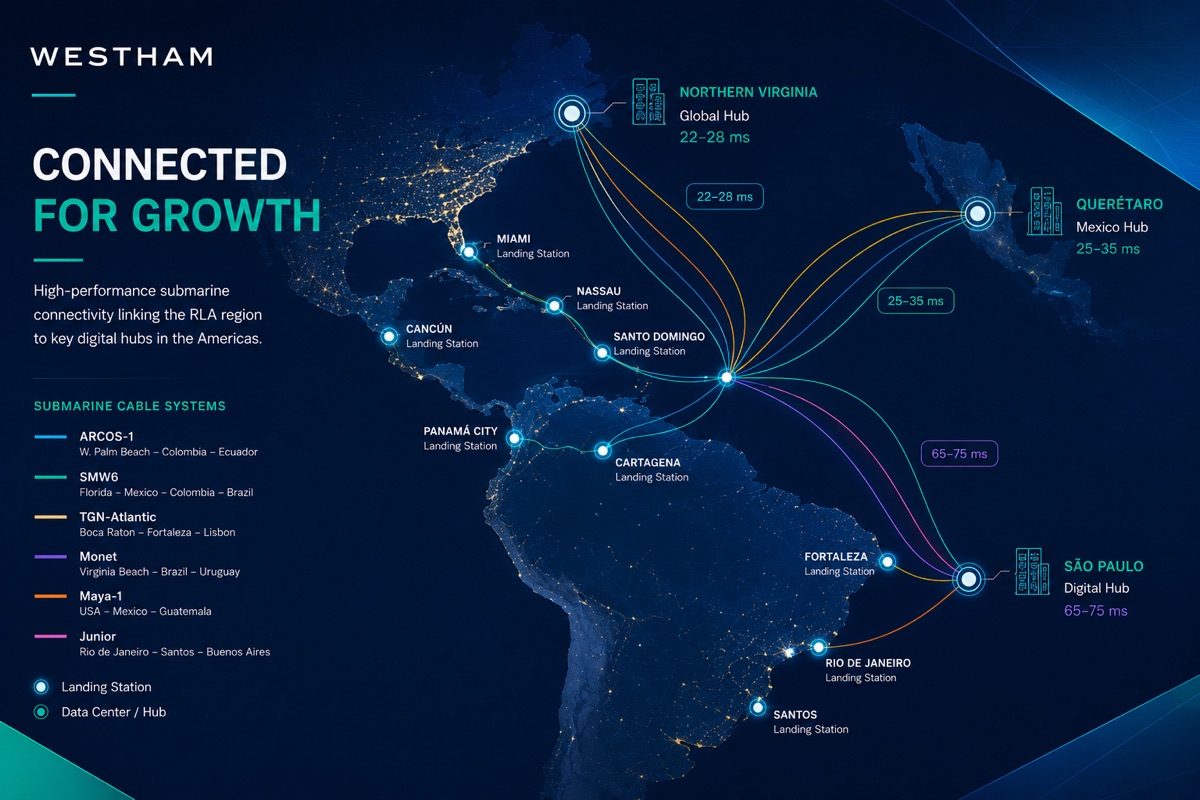
But our questions are not the ones the global press is answering. When the nearest cloud region is in Northern Virginia, Querétaro, or São Paulo, how much latency are we really designing around, and which workloads can we afford to send across a submarine cable? When a regulator demands that citizen data stay inside the country, what does sovereign cloud actually cost in practice? When your best engineers can earn dollars working remotely for a company abroad, how do you build a platform team that stays? When energy is expensive and the grid is uneven, what does it mean to run GPUs at all?
The hard part is no longer access to information. The new hard part is interpretation in a setting the global narrative tends to ignore. That gap, between what is announced and what it means here, is the space where this publication lives.
What this new space is, and what it is not
This weekly publication is an analysis of current enterprise infrastructure: the compute, networking, storage, cloud, security, and software that the modern economy runs on, and the artificial intelligence now reshaping all of it, read through the lens of the businesses, constraints, and opportunities of the Caribbean and Mesoamerica.
It is not vendor marketing. It is not a feed of product launches dressed up as insight. Even though we are all stakeholders in the HPE ecosystem, we will say this plainly, especially when celebrated products are overbuilt for the problems they claim to solve, or when an unfashionable approach is quietly the right answer for our regional operations.
We will start every conversation with business, not technology. Every piece of infrastructure exists because someone had a problem worth paying to solve. A storage architecture is interesting only because of what it enables a Caribbean bank, a regional hospital network, a hotel group, or a nearshoring plant to do that it could not do before.
So we will start with the problem, the economics, and the people who win or lose, and treat the technology as the consequence that moves thinking models toward solving those problems. With that said, if you only want to know what a product does, the spec sheets are there for free. We are interested in why it exists and whether it earns its place in your environment.
We stay partner-oriented on purpose. We will write about a single company in depth when it matters: its strategy, its strengths, its real weaknesses, and, crucially, how well it actually supports customers in our region versus how it markets itself globally. But always against the backdrop of its competitors and the market forces acting on all of them. We know that no competitive advantage is permanent. The moment our analysis becomes blind cheerleading, it stops being useful to the people making decisions.
We take history seriously. Most "new" ideas in infrastructure are old ideas returning with better economics. Edge computing rhymes with the distributed systems of the 1990s. Today's AI factories rhyme with the supercomputing centers that preceded them. Private and sovereign cloud are, as Francisco Celedon (our founder) says, the pendulum swinging back from public cloud the way it always eventually does, a swing that lands differently in markets where data residency and connectivity are first-order concerns. You cannot forecast where this is going without knowing where it has already been.
We separate what is real from what is coming and from what is merely possible. There is current reality, near-term evolution, and long-term speculation, and confusing the three is how organizations waste money, money that is scarcer and harder won here than the global headlines assume. Self-healing data centers, intent-based networking, autonomous infrastructure, and agents that operate the stack without humans are worth thinking about seriously. They are not worth budgeting for as if they shipped yesterday. We will always tell you which shelf an idea belongs on.
Who this new space is for
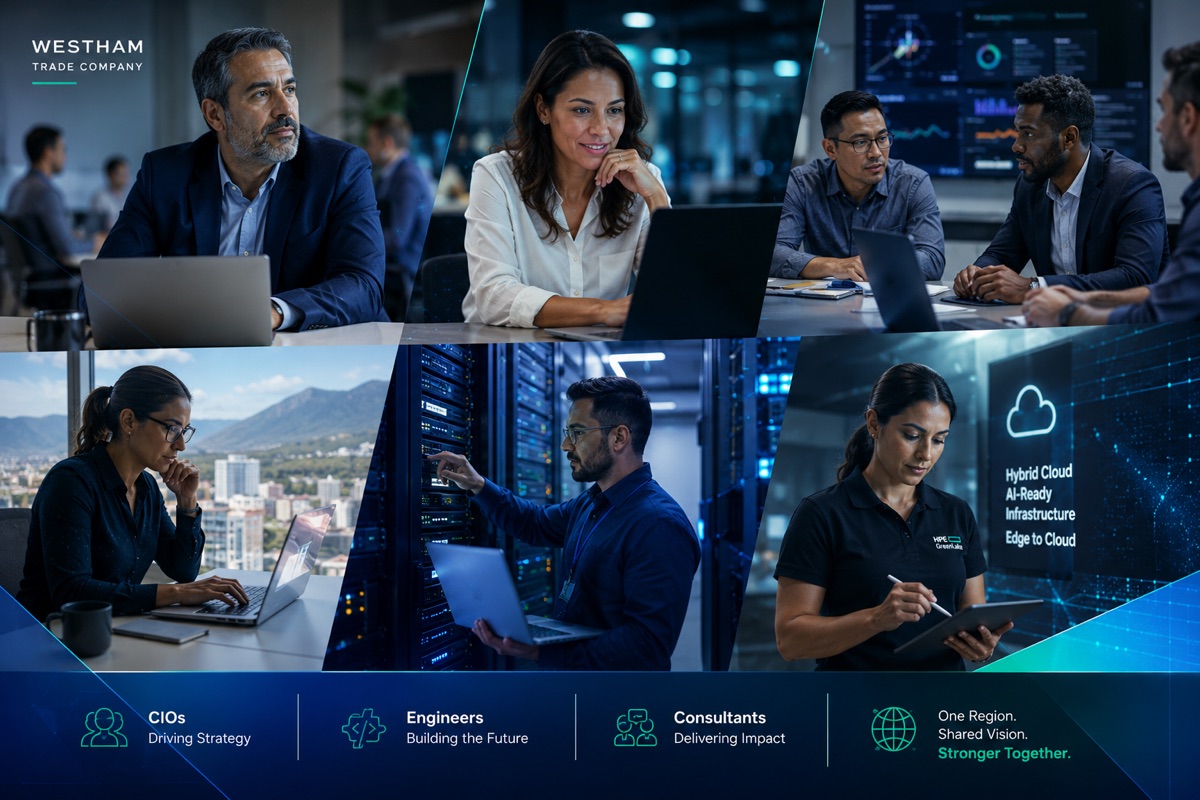
We write for the people who have to make decisions with real consequences across the region: CIOs and CTOs setting strategy, architects choosing what to build on, engineers who keep systems running through outages and bandwidth limits, and the channel partners, integrators, and consultants who guide enterprises through choices they will live with for years.
If you are an investor trying to understand where infrastructure spending is flowing in RLA, you will find value here. If you are a student or a curious technologist who wants to understand how this industry truly works beneath the marketing, and how the region fits into it, you are welcome too.
The goal is the same for everyone: to leave each article understanding not just what happened, but why it matters and what to do about it.
What our partners can expect
A regular rhythm of analysis across the forces reshaping enterprise technology, with our context always kept in view: artificial intelligence and the agentic systems being built on it; the AI infrastructure race in compute and GPUs, and what realistic access to it looks like from here; the data center and connectivity buildout, submarine cables, regional cloud zones, and power, that determine what is even possible; the contest between public cloud and the hybrid, private, and sovereign architectures that data regulations and economics keep pulling workloads toward; storage turning into data platforms; security becoming a property of everything rather than a layer on top; and the automation slowly absorbing work once done by hand.
Some pieces will be deep dives into one technology. Some will be head-to-head comparisons of competing approaches. Some will be market reports tracking where the money and the momentum are moving, regionally and globally. Some will be short, opinionated takes on a single announcement that deserves more scrutiny than it received.
Every article will try to pass a simple test: would a working architect in San José, Aruba, or Bridgetown learn something new, and would a CIO in the region find something strategically useful?
This is our invitation
The companies building this infrastructure spend enormous sums telling you their version of the story. Far less effort is spent helping you make sense of all of it at once, independently, and with the context that turns a pile of global announcements into a coherent picture of what this shift means for an enterprise operating in the Caribbean or Mesoamerica.
That is the work we are setting out to do here.
If that is the kind of thinking you want in your inbox, subscribe and stay with us. The rebuild is already underway, and the organizations in our region that read it correctly will be the ones still standing, and ahead, when the next one begins.
Let's dive into it.

Join the conversation
Comments are reviewed before they appear. No account needed, just a name and your thoughts.